Categories
Categories allow logical grouping of dictionary items. Categories create a hierarchical order within the dictionary structure. You can only add a category to the root of the dictionary structure, and then add the remaining elements of the dictionary structure (views and elements) to the category.
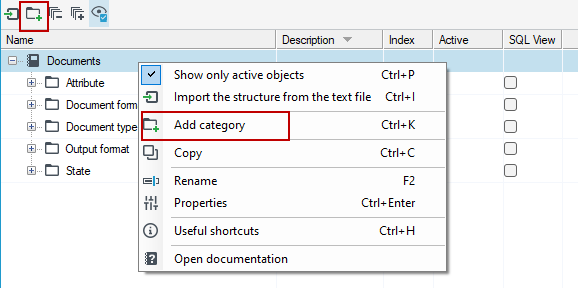
A category may also contain subcategories, dictionary views and have dictionary attributes that characterize it.

Examples of using categories
The simplest example of a dictionary category that will group dictionary items is a category that will contain information about the processing status. Then such a category can be assigned to the dictionary field of the data structure being created, see: Data structure objects> dictionary field.
- Add a Processing Status category to the dictionary structure.
- Add items to the category: New, In progress, Completed with error, Completed.

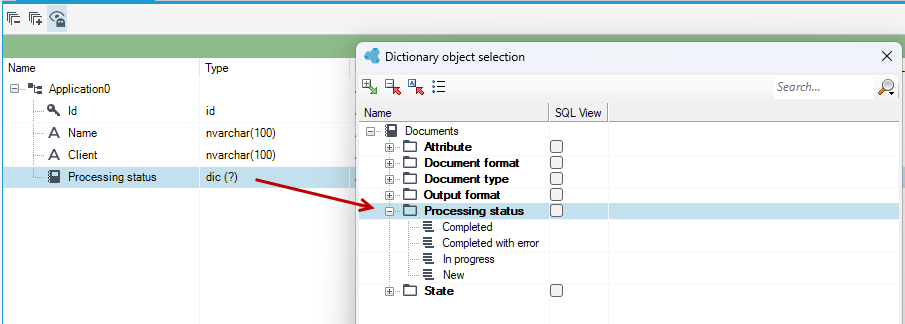
- Create a data structure and add a Status dictionary field to it. Then select the dictionary and the category Processing status.
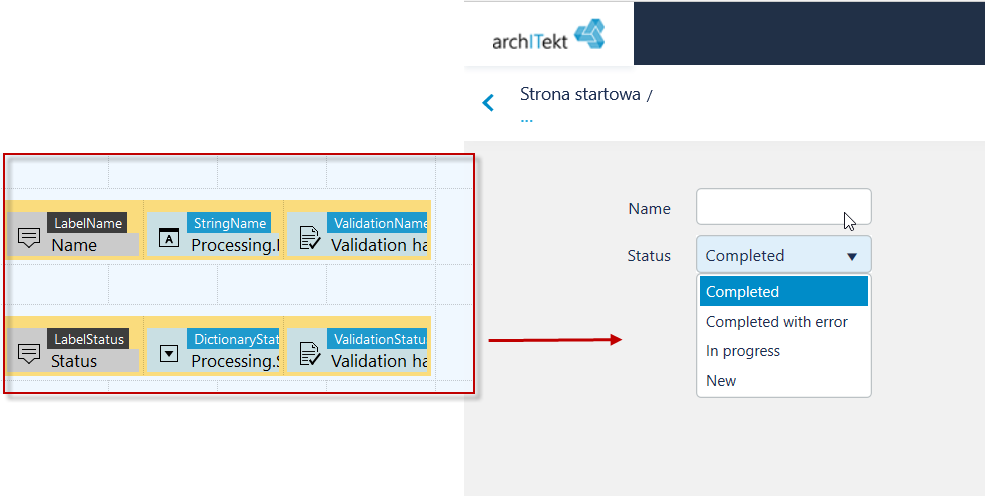
- Add a form and put the Status field on the form. Now, when the form is displayed, you can select a value for the processing status.